
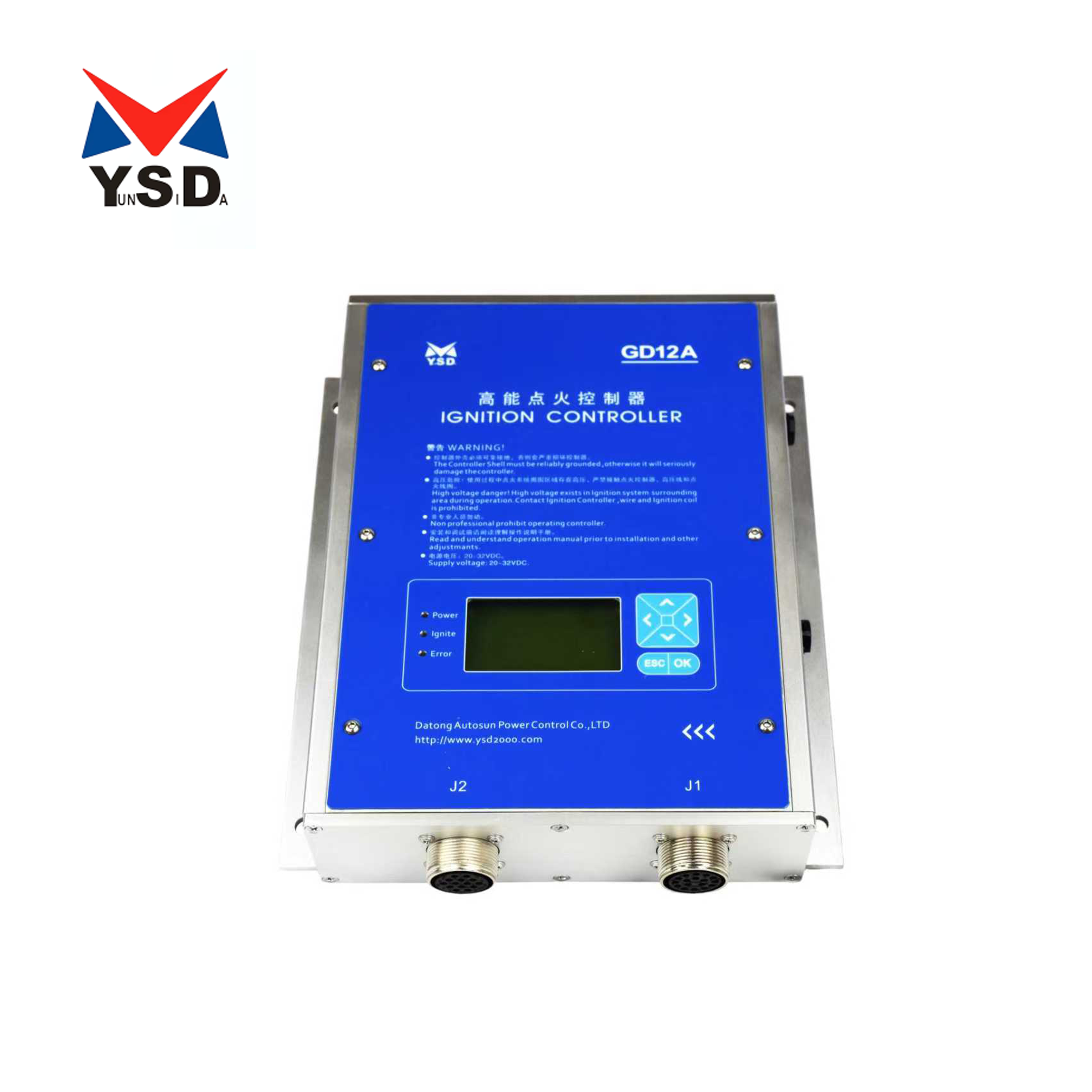
Engine stability is one of the most critical performance factors in any power generation or industrial drive system. When load conditions shift suddenly, or fuel supply fluctuates, an uncontrolled engine can surge, stall, or operate at dangerously inconsistent speeds. This is precisely where a governor speed controller becomes indispensable. By continuously monitoring and adjusting engine output, it acts as the central intelligence that keeps rotational speed within a defined, stable range regardless of external disturbances.
Understanding how a governor speed controller improves engine stability requires looking at both the mechanical and electronic principles at work. Modern industrial engines face highly variable operating environments — from sudden load additions in generator sets to rapid deceleration demands in heavy machinery. Without precise governing, these transitions produce speed deviations that reduce efficiency, accelerate component wear, and in severe cases, cause system failure. A well-engineered governor speed controller addresses each of these challenges through a closed-loop feedback mechanism that responds in real time.
The Core Mechanism Behind a Governor Speed Controller
How Speed Sensing and Feedback Work Together
At the heart of every governor speed controller is a speed sensing element that continuously reads the engine's actual rotational speed, typically measured in RPM. This signal is compared against a preset reference speed — the target at which the engine should operate. The difference between the actual speed and the reference speed is called the error signal, and it is this error signal that drives all corrective action within the system.
When the engine runs faster than the setpoint, the governor speed controller reduces fuel delivery to bring the speed back down. When the engine slows below the target, it increases fuel flow to restore the correct RPM. This continuous cycle of measurement, comparison, and correction is what defines closed-loop governing and what makes it so effective at maintaining stability under dynamic conditions.
The speed at which this feedback loop operates is a key differentiator between basic and advanced governor speed controller designs. Electronic governors can complete this cycle hundreds of times per second, giving them a significant advantage over older mechanical designs in terms of response precision and stability margin.
The Role of the Actuator in Speed Regulation
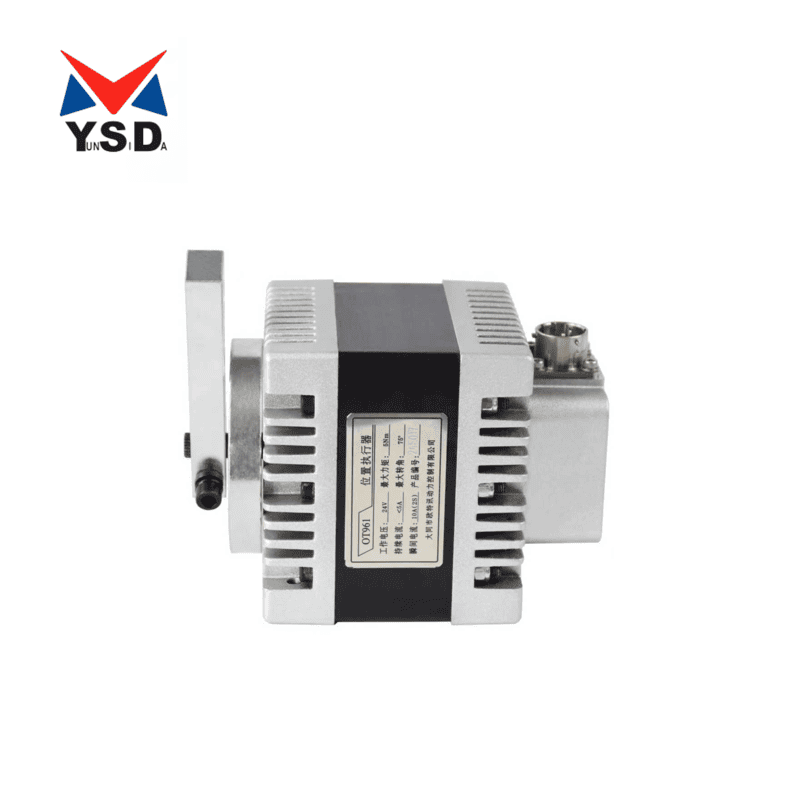
The governor speed controller does not act on the engine directly — it works through an actuator, which is the physical component that adjusts the fuel control mechanism. In gas engines and generator sets, this is typically a proportional actuator that moves a fuel rack or throttle valve in direct proportion to the control signal it receives from the governor.
The precision of the actuator directly determines how smoothly the governor speed controller can regulate engine speed. A sluggish or imprecise actuator introduces lag into the control loop, which can cause oscillation or overshoot — the very instability the system is designed to prevent. Modern integrated actuator-controller designs address this by combining the driver electronics and the actuator into a single unit, reducing signal delay and improving overall system responsiveness.
This integration is particularly valuable in generator applications where frequency stability is directly tied to engine speed. Even small deviations in RPM translate into frequency fluctuations that can affect sensitive electrical loads, making the actuator's precision a critical factor in overall system quality.
How a Governor Speed Controller Handles Load Transients
Sudden Load Addition and Speed Droop
One of the most demanding tests for any governor speed controller is the sudden addition of a large electrical or mechanical load. When a heavy load is connected to a generator, the engine experiences an immediate increase in resistance, which causes it to slow down. Without governing, this speed drop would continue until the engine either recovered naturally or stalled entirely.
A governor speed controller detects this speed drop within milliseconds and immediately commands the actuator to increase fuel delivery. The speed recovery curve — how quickly and smoothly the engine returns to its setpoint — is a direct measure of the governor's performance. A well-tuned governor speed controller achieves this recovery with minimal overshoot, meaning the engine does not swing above the setpoint before settling.
The concept of 'droop' is important here. Droop governing allows a small, intentional speed reduction under load, which improves stability in parallel generator applications by ensuring load sharing between multiple units. Isochronous governing, by contrast, maintains a perfectly constant speed regardless of load, which is preferred in single-generator or precision applications. A quality governor speed controller typically supports both modes.
Load Rejection and Overspeed Prevention
The reverse scenario — sudden load removal — is equally challenging. When a large load disconnects from a running engine, the engine suddenly has excess power with no resistance to absorb it. This causes a rapid speed increase that, if unchecked, can lead to overspeed conditions that damage engine components or trigger protective shutdowns.
The governor speed controller responds to load rejection by rapidly reducing fuel delivery, cutting the power input to match the new, lower demand. The speed of this response is critical. A governor speed controller with fast electronic response can prevent the engine from exceeding safe RPM limits even during abrupt full-load rejection events.
This overspeed protection function is not just a performance feature — it is a safety requirement in many industrial and power generation standards. The governor speed controller effectively serves as the first line of defense against mechanical overspeed, working in coordination with dedicated overspeed shutdown systems to provide layered protection.
Stability Improvements Across Different Operating Conditions
Performance Under Variable Fuel Quality
In gas engine applications, fuel quality is rarely perfectly consistent. Variations in gas composition, calorific value, and supply pressure all affect the energy content delivered per unit of fuel. Without compensation, these variations cause the engine to run faster or slower than intended, even with no change in load.
A governor speed controller compensates for fuel quality variations automatically because it governs based on actual engine speed rather than fuel quantity. If lower-quality gas causes the engine to slow, the governor increases fuel flow to restore the setpoint. If higher-energy gas causes the engine to accelerate, it reduces flow accordingly. This makes the governor speed controller an essential component for gas engines operating on variable or mixed fuel sources.
In biogas, landfill gas, and natural gas applications where composition can shift significantly over time, this adaptive behavior of the governor speed controller is what allows the engine to maintain consistent output quality and protect downstream equipment from speed-related disturbances.
Temperature and Altitude Compensation
Ambient temperature and altitude both affect air density, which in turn affects combustion efficiency and engine output. An engine that is perfectly tuned at sea level and moderate temperature will behave differently at high altitude or in extreme heat. These environmental factors introduce a form of slow-drift instability that a governor speed controller is well-positioned to address.
Because the governor speed controller continuously monitors actual speed and adjusts fuel delivery in real time, it inherently compensates for the performance changes caused by environmental conditions. The engine does not need to be manually retuned for different operating environments — the governor adapts continuously to maintain the target speed.
This is particularly valuable for mobile power generation equipment, rental generator fleets, and industrial engines deployed across multiple geographic locations. The governor speed controller ensures consistent performance regardless of where the engine is operating, reducing the need for site-specific calibration and simplifying maintenance procedures.
Tuning and Configuration for Optimal Stability
PID Control Parameters and Their Effect on Response
Most modern electronic governor speed controller designs use PID (proportional-integral-derivative) control logic to calculate the corrective output. Each of the three parameters plays a distinct role in shaping the engine's stability response. The proportional gain determines how aggressively the governor reacts to speed errors. The integral term eliminates steady-state offset, ensuring the engine holds exactly at the setpoint over time. The derivative term anticipates speed changes based on the rate of error change, providing a damping effect that prevents overshoot.
Tuning these parameters correctly is essential to achieving stable, responsive governing. An overly aggressive proportional gain causes oscillation — the engine hunts back and forth around the setpoint rather than settling smoothly. Insufficient gain causes sluggish response and large transient deviations. A properly tuned governor speed controller finds the balance that delivers fast recovery without instability.
Many advanced governor speed controller units offer adjustable gain settings that can be configured during commissioning to match the specific engine and load characteristics of the application. This flexibility allows the same controller to be optimized for a wide range of engine sizes and operating profiles.
Integration with Engine Management and Protection Systems
A governor speed controller does not operate in isolation. In modern engine systems, it is integrated with broader engine management platforms that handle ignition timing, air-fuel ratio control, fault monitoring, and communication with external supervisory systems. The quality of this integration directly affects how well the governor speed controller can maintain stability across the full range of operating conditions.
For example, when an engine management system detects a developing fault condition and begins a controlled shutdown sequence, the governor speed controller must respond in a coordinated way — reducing speed in a controlled ramp rather than cutting fuel abruptly. This coordination prevents mechanical stress and ensures that the shutdown process itself does not introduce damaging speed transients.
Similarly, in parallel generator applications, the governor speed controller must communicate with synchronization and load-sharing systems to ensure that speed adjustments made for load sharing do not conflict with the governing logic. A governor speed controller designed with open communication interfaces supports this integration cleanly and reliably.
FAQ
What is the primary function of a governor speed controller in a generator set?
The primary function of a governor speed controller in a generator set is to maintain constant engine speed regardless of changes in electrical load. Since generator output frequency is directly proportional to engine RPM, the governor speed controller ensures that frequency remains stable by continuously adjusting fuel delivery to match the power demand placed on the generator.
How does a governor speed controller differ from a simple throttle control?
A simple throttle control sets a fixed fuel delivery position without feedback. A governor speed controller, by contrast, uses continuous speed measurement and closed-loop feedback to adjust fuel delivery dynamically. This means it actively compensates for load changes, fuel variations, and environmental factors rather than relying on a static setting that cannot adapt to changing conditions.
Can a governor speed controller be retrofitted to an older engine?
In most cases, yes. A governor speed controller can be retrofitted to older engines provided the engine has a compatible fuel control actuator or can be fitted with one. The key requirements are a reliable speed sensing signal, a compatible actuator interface, and sufficient access to the fuel control mechanism. Many retrofit governor speed controller kits are designed specifically for common industrial engine platforms to simplify this process.
What causes a governor speed controller to hunt or oscillate?
Hunting or oscillation in a governor speed controller is most commonly caused by incorrect PID tuning, particularly excessive proportional gain. It can also result from mechanical issues such as actuator stiction, worn linkages, or air in the fuel system that cause irregular fuel delivery. In some cases, electrical interference with the speed sensing signal can introduce noise that the governor interprets as speed fluctuations, triggering unnecessary corrective action. Proper commissioning and periodic maintenance address all of these causes.